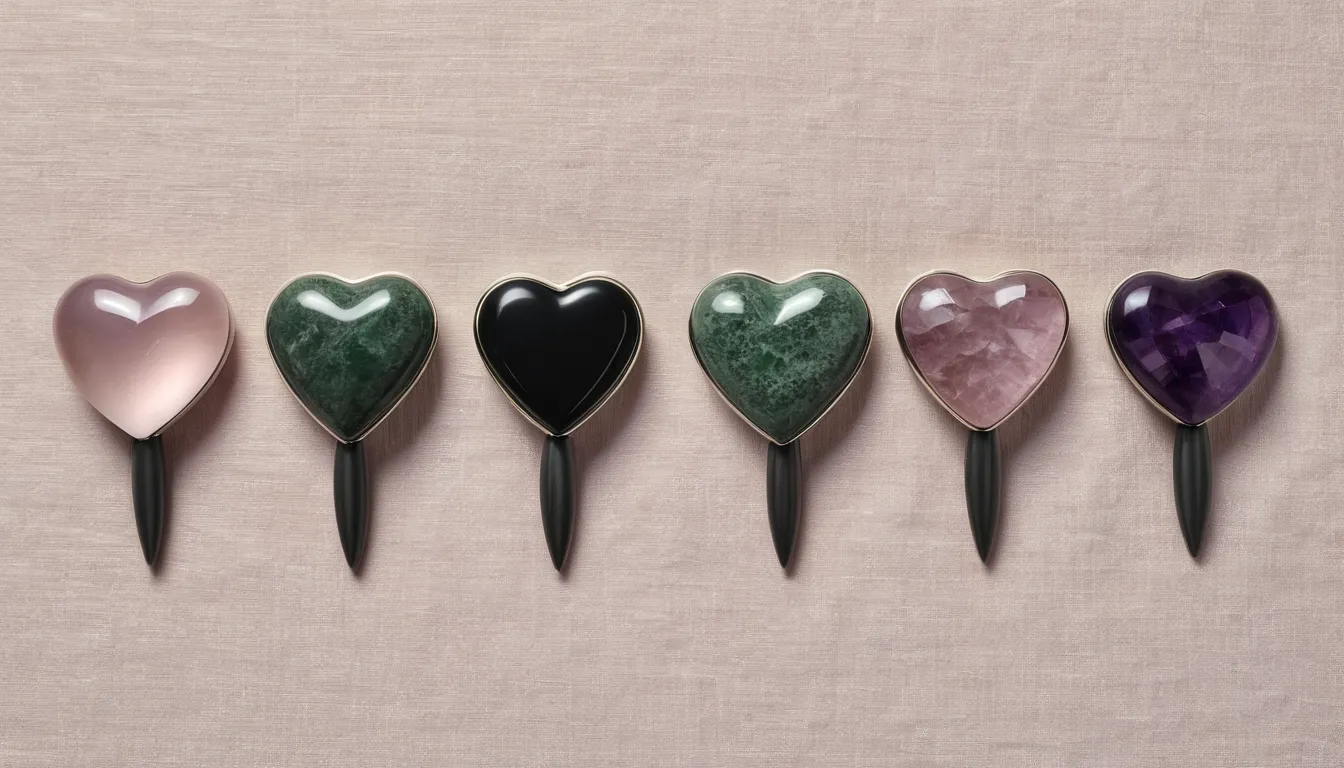
Materials at a glance
The table lists the materials you will see most often. Hardness is given on the Mohs scale, a simple 1 to 10 ranking of how easily one mineral scratches another. Figures are rounded and vary a little between sources and samples.
| Material | What it is | Hardness (Mohs) | Care note |
|---|---|---|---|
| Jade | Two different minerals share the name: nephrite and jadeite. Many tools sold as jade are other green stones. | About 6 to 7 | Dense and smooth. Avoid hot water and drops. |
| Rose quartz | A pink form of quartz, one of the most common minerals. | About 7 | Color can fade after long spells in strong sunlight. |
| Amethyst | A purple form of quartz. | About 7 | Also known to fade in strong sunlight. Store it in a pouch. |
| Clear quartz | Colorless quartz. Glass is sometimes sold under the same name. | About 7 | Chips show up as bright white marks. Check edges often. |
| Obsidian | Natural volcanic glass, usually black. | About 5 to 5.5 | Softer and more brittle than quartz. A chip can leave a sharp edge. |
| Stainless steel | A metal alloy. Not a stone, but sold for the same routines. | Not a stone | Will not crack if dropped. Some steels contain nickel. |
Jade and look-alikes
"Jade" covers two different minerals, nephrite and jadeite. Both are tough, dense stones that take a smooth polish. Many tools sold as jade are other green stones, such as serpentine, or stone that has been dyed. Some are glass. A label alone doesn't tell you which you have, and for a facial tool it matters less than a smooth, even edge. If the material matters to you, ask the seller exactly what the stone is.
Rose quartz, amethyst and clear quartz
All three are forms of quartz, so they share a hardness of about 7 and feel much the same in the hand. The color is the main difference. Rose quartz and amethyst can fade if they sit in strong sunlight for long periods, so keep them in a drawer or pouch. Clear quartz shows small chips as bright white marks, which makes damage easy to spot.
Obsidian
Obsidian is natural volcanic glass. It is softer than quartz and more brittle, so a drop onto a hard floor is more likely to chip or crack it. A chipped edge on any glassy material can be sharp. Check obsidian tools often and stop using one that has a chip on a working edge.
Stainless steel
Steel tools don't crack when dropped, are easy to clean, and are the same all the way through. They warm up in the hand a little faster than stone. Some stainless steels contain nickel. If you know you react to nickel, ask a dermatologist before using a metal tool on your face.
Why stone feels cool
Stone and metal feel cool to the touch because they draw heat away from your skin faster than wood or plastic. The tool warms to your skin temperature after a minute or two of use. Some people keep a tool in the fridge in a clean container because they like the cooler feel. If you do, a short spell is enough. Skip the freezer, and don't move a cold stone straight into hot water, because sudden temperature changes can crack stone.
What to check on any tool
- Edges are smooth and evenly rounded, with no chips, cracks or rough patches.
- The surface is polished all over, including the back and the notch.
- It sits comfortably in your hand, with enough weight that you don't need to grip hard.
- The seller says what the material is and gives care instructions.
Once you have a tool, the shapes guide explains which edge fits where, and the cleaning guide covers daily care.